A precise use of the name
Gemologists use jade as a broad name for jadeite and nephrite; GIA also notes limited cases involving green omphacite. Jadeite belongs to the pyroxene group. In finished objects its tiny interlocking crystals help explain the material’s celebrated toughness. Hardness and toughness are not the same: a surface may scratch even when the object strongly resists fracture.
Color is only the beginning
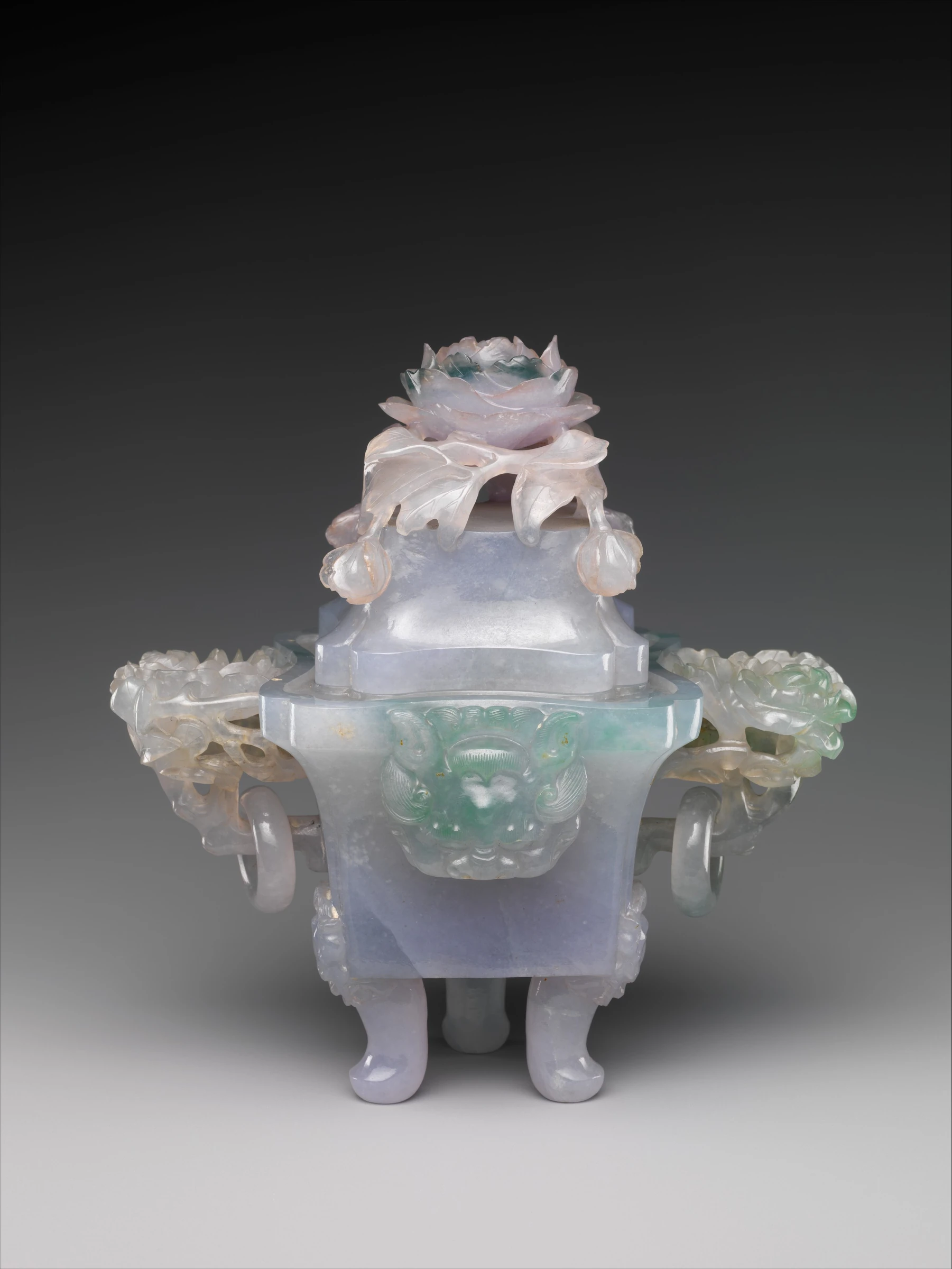
Jadeite occurs in green, lavender, white, yellow, reddish orange, brown, gray and black. Color may gather in veins, clouds or patches rather than forming a uniform field. Transparency ranges from opaque to semitransparent, and texture reflects grain size and the way crystals meet. Those qualities should be observed together, not reduced to one label.
What photographs cannot establish
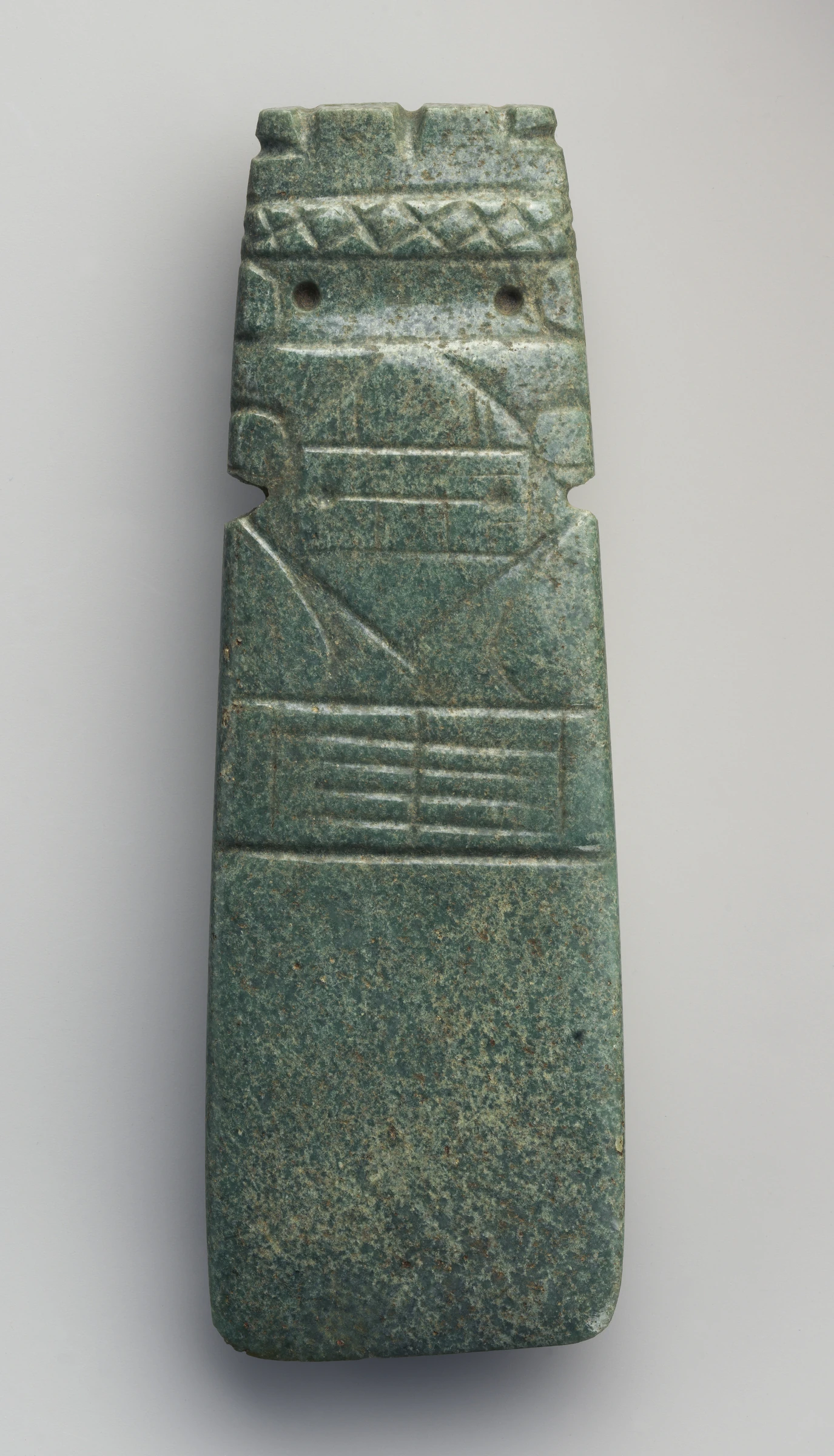
A photograph records one lighting setup, exposure and screen profile. It cannot establish mineral identity or treatment history. Careful viewing can describe hue, distribution, luster and visible features; laboratory testing is the proper route when identity or treatment disclosure matters.
A name that carries two tests
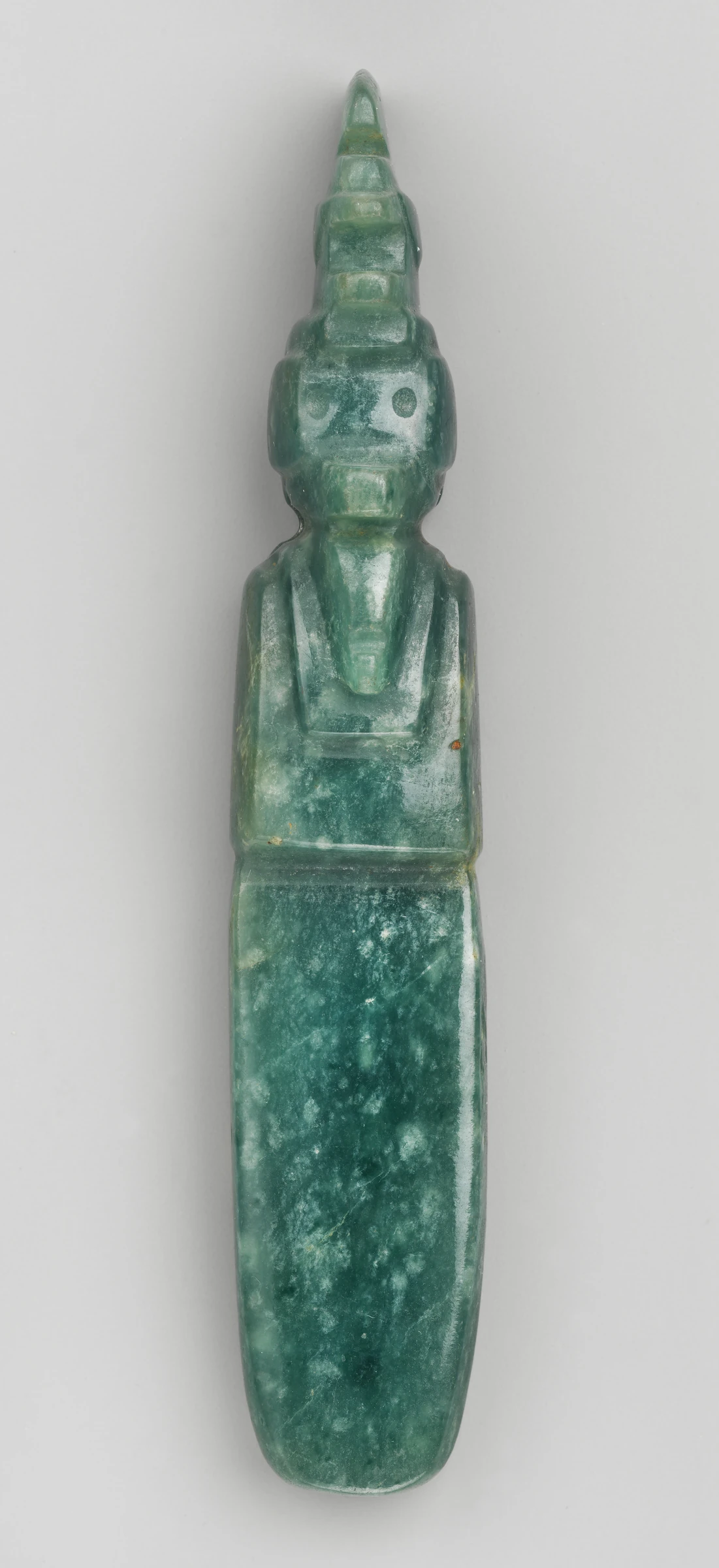
The word jadeite answers a mineral question, not a quality question. Identification asks what the material is; appreciation asks how color, transparency, texture, proportion and finish work together. Keeping those questions separate prevents a laboratory name from being mistaken for a grade.
Jadeite is a mineral—and usually an aggregate
Jadeite is a sodium-aluminium pyroxene mineral. Gem jadeite is commonly an interlocking aggregate rather than a single transparent crystal of the kind used for many faceted gems. That aggregate structure helps explain its notable toughness and the visual importance of texture.
“Jade” is the broader historical name that also includes nephrite. Their distinction is set out in jadeite versus nephrite.
Why appearance varies so widely
Jadeite may be green, lavender, red, orange, yellow, brown, gray, black or near colorless. Color depends on composition and distribution; the face-up result also changes with thickness, texture, transparency, polish and light. No color name by itself defines quality.
GIA evaluates jadeite through interacting factors including color, transparency, texture, cut, size and polish. Use the color guide and transparency and texture separately before combining observations.
Formation and rock context
Jadeite-bearing rocks form under high-pressure, relatively low-temperature metamorphic conditions associated with subduction environments. Natural boulders can preserve multiple textures, mineral domains and later alteration. Geological complexity is one reason a small exposed face cannot describe an entire rough volume.
For rough observation, continue to skin, windows and cut surfaces.
Material identity is not treatment status
A specimen can be correctly identified as jadeite and still require a separate treatment statement. Bleaching, polymer impregnation and dye concern what happened after formation; they do not turn the identification field into a complete disclosure.
Likewise, untreated does not mean fine, flawless or valuable. Read natural versus treated jadeite for the diagnostic boundary.
A practical first examination
| Dimension | Record |
|---|---|
| Identity | Report wording and issuing laboratory |
| Color | Hue, tone, saturation, distribution, light |
| Material | Transparency, texture, visible features |
| Craft | Proportion, surface, polish, setting |
| Condition | Fractures, chips, abrasion, repairs |
This record separates what can be seen from what requires testing and keeps aesthetic preference distinct from unsupported claims.
Research basis
- Jade Description — GIA
- Jadeite Quality Factors — GIA
- The Met Open Access — The Metropolitan Museum of Art