Polish is geometry made visible
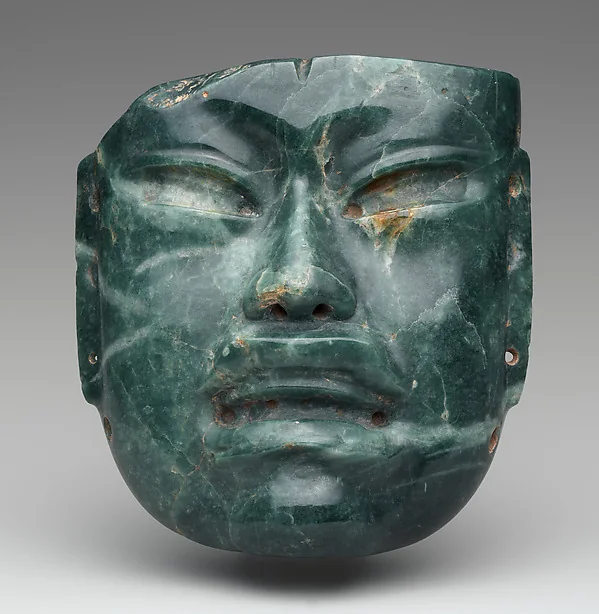
A polished jadeite surface is not created by gloss alone. Before the final finish, the outline, planes and curves must already be coherent. Polishing then reveals—or exaggerates—the quality of that preparation. On a well-resolved surface, reflected lines travel smoothly. On an uneven one, they wobble, break or blur even when the object appears bright in a still photograph.
GIA’s jadeite quality guidance describes fine polish through smooth luster and sharp, undistorted reflections, without visible pitting or an orange-peel texture. Those are useful observation terms because they refer to the behavior of a surface rather than a vague impression of luxury. They do not identify the material or establish treatment status.
Preparation comes before shine
After cutting, progressively finer abrasive work removes saw marks and refines form. The exact equipment and abrasive sequence vary by workshop and object; an institutional history from GIA documents both manual and modern powered methods in jade carving, while its Burmese field report records carborundum work and polishing practices. The reliable principle is progression: coarse damage must be removed before a finer finish can become continuous.
Skipping preparation does not preserve more of the design. It leaves deeper scratches beneath a glossy field or rounds a ridge while trying to erase a local defect. Each abrasive stage should remove the marks of the preceding stage without unnecessarily changing the intended profile. A cabochon dome, bangle curve and carved recess therefore demand different control even when the final visual aim is a coherent surface.
Polish also cannot repair every structural condition. A cavity or fracture may remain visible because removing it would alter the form or consume too much material. The presence of a natural feature is not automatically poor workmanship; the question is whether the surrounding surface has been deliberately finished and whether the condition has been represented accurately.
Reflection, luster and surface uniformity
Luster describes how light returns from the surface; transparency describes how light passes into and through the material. They are related in appearance but not interchangeable. A highly polished opaque area can carry a strong surface reflection, while a translucent area with weak preparation may look dull. Our guide to transparency and texture separates these viewing dimensions.
To inspect polish, use a diffuse light source with a clear straight edge—a window frame or soft rectangular light works well. Move either the piece or the light and follow the reflected line. A stable curve should produce a smooth, continuous movement. Rippling, sudden distortion or scattered dull patches may indicate unevenness, fine abrasion or local pitting. Dust and fingerprints can imitate some of these effects, so begin with conservative cleaning rather than immediate repolishing.
Flat planes, domes and carved recesses
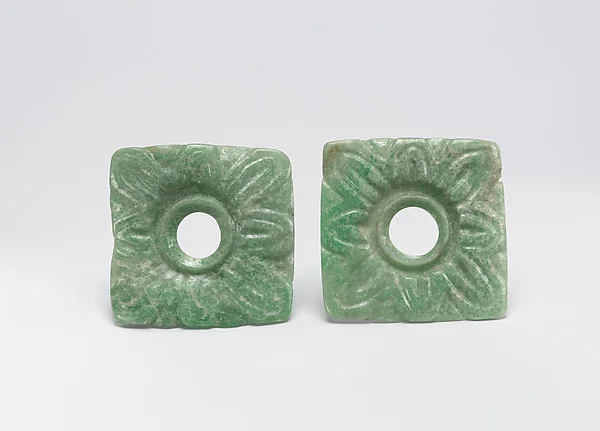
Different geometries reveal different faults. A broad plane makes waviness and edge roll easy to see. A cabochon dome tests whether reflections flow through the apex without an abrupt flat spot. A bangle asks for continuity around both inner and outer curves. Recessed carving is harder to reach and may carry a deliberately softer finish, but a deliberate contrast should still read as controlled rather than neglected.
Edges deserve separate attention. Over-polishing can soften a crisp boundary or reduce small relief details; under-finished edges can retain scratches that catch light at certain angles. On jewelry, some edges disappear beneath a metal setting. Inspection before setting is therefore important, because a mount can obscure rather than resolve a surface issue.
What photographs conceal
Product photography is designed to organize light. Large soft sources suppress harsh reflections; contrast and sharpening can make a surface appear cleaner; a single angle may avoid the line that reveals waviness. A photograph can document color placement and broad luster, but it is weak evidence for minute scratches, pits and continuous curvature.
Ask for more than one view when surface quality matters: front, profile, back and a short rotation under neutral light. Video is helpful only when it preserves detail and has no filter or heavy compression. Even then, it does not replace handling, magnification or gemological testing. The same restraint applies to cabochon shape, where dome and polish must be considered together.
Care is not repolishing
A surface that looks dull may simply carry skin oils, soap residue or dust. GIA recommends warm soapy water and a soft brush as a safe cleaning approach for jade, while noting that treatments can affect care choices. Abrasive compounds, powered tools and improvised home polishing remove material and can alter edges; they are not routine cleaning.
If scratches, loosened settings or uncertain treatment are involved, seek an appropriate jeweler or gemological professional before intervention. A decision to repolish trades surface renewal against material removal and possible change of profile. That is a conservation decision, not a household maintenance step. For routine handling, follow the separate jadeite care guide.
Research basis
- Jadeite Quality Factors — GIA
- Burmese Jade: The Inscrutable Gem — Gems & Gemology, GIA
- The Evolution of Chinese Jade Carving Craftsmanship — Gems & Gemology, GIA
- Jade Care and Cleaning Guide — GIA