The design begins with a physical limit
Jadeite carving is often described through motif, yet the first design problem is material. Shape, thickness, color zoning and visible discontinuities set the boundaries within which a carver can work. GIA’s study of Chinese jade carving describes a sequence of material selection, examination, design, carving and polishing. That order matters: a drawing is not simply imposed on an interchangeable block.
A broad, shallow piece may invite relief; a compact mass can support deeper contour; a narrow color band may become an accent rather than the whole subject. The maker must also reserve enough material for transitions and finishing. A line that looks elegant on paper may be structurally awkward when it creates a thin bridge or sharp internal corner.
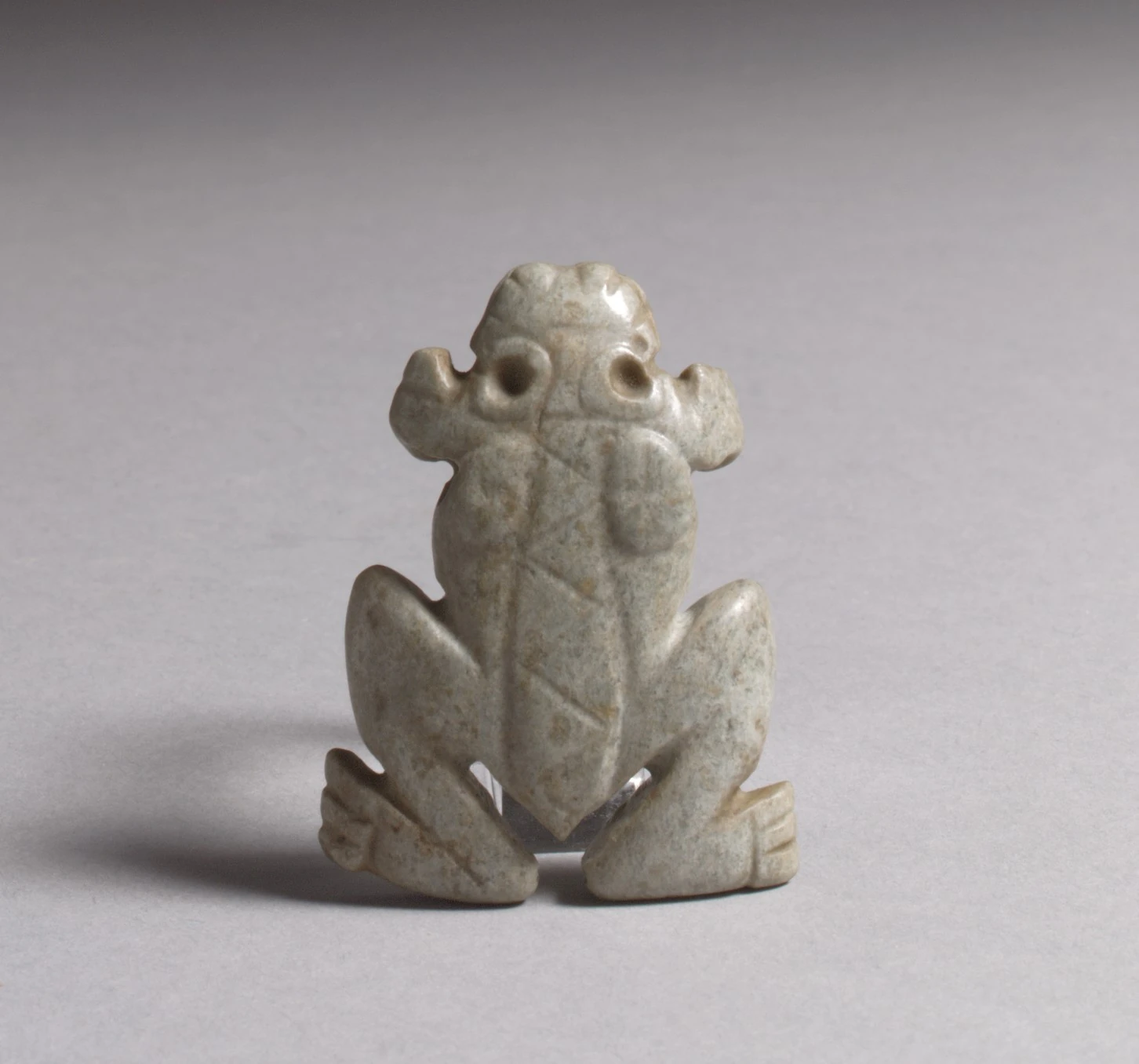
Drawing, transfer and controlled removal
In GIA’s documented visit to a contemporary jadeite carving workshop, the design was developed after the rough had been evaluated, then sketched and transferred to the material. Painted guide lines helped preserve the composition while rotary burrs and flexible-shaft tools removed material. This is a process of repeated checking: a tool mark changes the surface permanently, and the next decision begins from that new surface.
Modern tools increase control and speed, but they do not remove the need to read the stone. GIA’s broader craft history records manual methods alongside computer-aided design, CNC work and three-dimensional replication. These technologies describe how material can be shaped; they do not by themselves establish artistic or material quality. The finished object must still be judged through proportion, transitions, detail and surface.
Carving differs from the broad separation covered in jadeite cutting. Cutting opens or divides the rough and establishes blanks. Carving makes more local decisions: lowering a background, rounding a contour, opening a passage or preserving a ridge. Both are subtractive, but the scale and visual purpose of removal differ.
Using color without forcing it
The Chinese term qiaose refers to the skillful use of naturally uneven color in jade carving. GIA’s historical review treats this as a recognized design practice. A color patch might define a leaf, garment edge or focal detail while a quieter area carries the surrounding form. The material offers a possibility; the design decides whether that possibility reads clearly.
Color use is not automatically successful because it is dramatic. A boundary that interrupts anatomy, weakens an outline or produces visual imbalance may feel accidental. Conversely, a restrained transition can clarify depth without becoming the subject. Readers interested in the difference between documented historical motifs and modern interpretations can continue to reading jadeite carving and motifs.
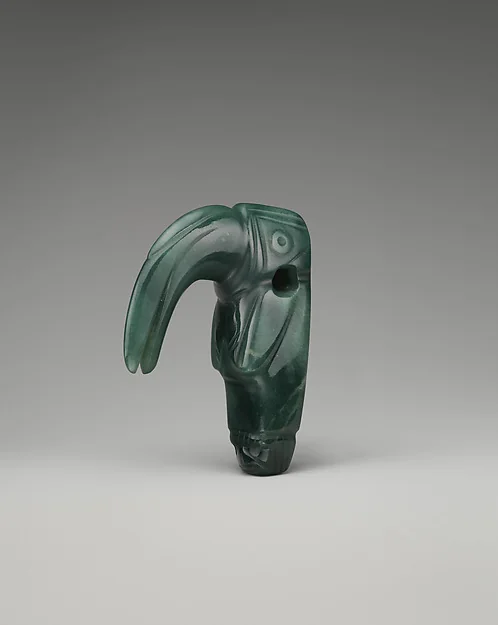
Relief, contour and the evidence of transitions
Relief creates depth by controlling the height between foreground and background. The useful question is not how deep every recess is, but whether planes meet with intention. Soft transitions can carry volume; crisp boundaries can separate pattern; drilled or open areas can introduce negative space. Abrupt hollows, softened details and irregular ridges may indicate either a deliberate texture or unfinished work, so they should be read in context.
Look where forms change direction. Does a leaf edge remain coherent around a curve? Do recessed fields end cleanly? Are repeated elements related without becoming mechanically identical? Does the back receive enough resolution to belong to the same object? These observations concern workmanship, not authenticity. A detailed carving can still be treated material, and a simple carving can be natural jadeite; visual complexity does not answer a laboratory question.
Finishing is part of the carving
Carving does not end when the motif is recognizable. Abrasive work and polishing determine how edges, recesses and broad planes receive light. A highly reflective field beside a softly finished recess can make the relief easier to read, but inconsistent scratches or rounded-over detail may weaken it. GIA’s craft study treats polishing as a distinct final stage because the surface changes the visibility of everything carved before it.
Photographs can show silhouette and strong relief, yet they often conceal shallow scratches, undercut areas and changes in reflection. Rotate a piece under diffuse light and inspect it from front, profile and back. For jewelry, also note how a later setting contacts or hides the carved edge. A mount should not be assumed to correct a weak or vulnerable contour.
Research basis
- The Evolution of Chinese Jade Carving Craftsmanship — Gems & Gemology, GIA
- Witnessing the Creation of Jadeite Masterpieces — GIA
- Jadeite Quality Factors — GIA