Prongs secure through a few precise contacts
A prong setting does not hold jadeite by surrounding it. Several metal elements rise from a head or basket, meet the stone at planned points and are tightened over its edge. Much of the outline remains visible. That openness is the attraction, but it also means security depends on a small number of contacts being correctly shaped and maintained.
GIA’s durability guidance describes a seat cut to support the stone before the prongs are brought into position. It warns that pressure over the girdle can damage even a diamond when applied heavily. Jadeite’s toughness is a strength in wear, yet a particular cabochon may have a thin edge, a fracture or a contour that concentrates force. The setter must work with the actual piece.
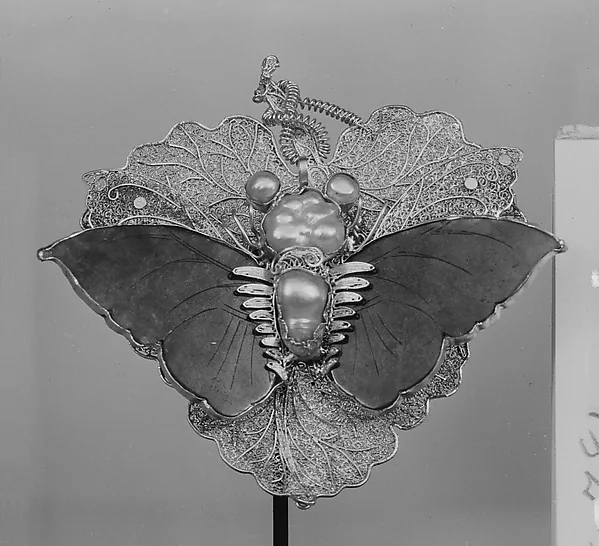
The seat does the quiet work
Before a prong is bent, its seat should correspond to the stone’s edge and profile. A cabochon is not supported like a faceted gem: its curved top, girdle area and back call for an individually fitted bearing surface. If the stone rocks in the untightened mount, forcing the prongs inward can replace fit with stress.
GIA distinguishes premade heads for calibrated stones from baskets fabricated for a specific shape. Fine jadeite cabochons are often not cut to calibrated dimensions, according to GIA’s jadeite quality guidance, so custom fit can be especially relevant. Read cabochon shaping before treating a small asymmetry as a defect.
Number and placement are design decisions
There is no universal correct number of prongs. The stone’s size, outline and vulnerable areas, along with the jewelry form and intended wear, influence placement. Opposing contacts should cooperate: one prong should not push the stone against another as if the mount were a clamp.
Prongs can also alter the visual reading. Fine prongs preserve the outline and admit an open side view; heavier prongs interrupt the edge but may provide more material for future maintenance. A strategically placed prong can protect a point, while a badly placed one may hide a chip or sit on a fracture. Structure should explain the placement.
Pressure is applied during setting and during life
Setting pressure occurs when metal is moved over the stone. Later, rings and bracelets receive knocks, fabric catches raised prongs and repeated wear abrades their tips. A prong that was secure at delivery can become thin, bent or lifted. This is why “jadeite is tough” is not a lifetime guarantee for a mount.
Check the piece in good light without pushing hard on the stone. Look for uneven gaps, a prong no longer matching its opposite, a changed angle or fibers catching at the tip. Movement, a new click or visible displacement calls for professional inspection. Do not tighten a prong with household tools.
Exposure, light and cleaning
Open sides make it easier to see the profile and remove ordinary residue, but more exposure also leaves edges accessible to impact. The setting may make a cabochon look brighter from some angles; this is a lighting effect, not a change in the material. Compare under controlled light as described in the jadeite lighting guide.
Warm soapy water and a soft brush are a conservative cleaning baseline for jade when the mount is stable and its construction is understood. Avoid catching bristles beneath a lifted prong. Unknown adhesive, loose metal or uncertain treatment should be assessed before cleaning. The broader care guide separates routine cleaning from intervention.
Repair requires a fresh assessment
Retipping or rebuilding a prong introduces tools, heat or polishing near the stone. GIA advises identifying the gem, considering enhancements and inclusions, and removing a stone before repair whenever possible. It also notes that polishing can thin prongs. A repair plan must therefore consider both jadeite and metal, not simply repeat the original setting action.
When comparing with a continuous rim, use prong versus bezel settings. The useful choice is not “more light” against “more safety” as slogans; it is the best-supported structure for the particular stone, proportions and wear.
Inspection sequence: four quiet checks
First view the piece face-up and compare opposing prongs. Then turn to profile and confirm that each contact reaches the intended edge rather than pressing high on the dome. Third, inspect beneath the head for a level seat and any residue that conceals a gap. Finally, compare with an earlier photograph if one exists; a changed angle often matters more than minor handmade variation present from the beginning.
Pairs and multi-stone pieces add another question: consistency. Matching prongs should share a visual rhythm, but each seat still needs to fit its own stone. Mechanical sameness is not a virtue if it forces two differently shaped cabochons into identical pressure patterns.
Research basis
- Gemstone Durability: Design to Display — Gems & Gemology, GIA
- A Guide to Ring Settings — GIA 4Cs
- Jadeite Quality Factors — GIA