“K-gold” describes fineness, not a setting style
In jewelry conversation, several different ideas are often compressed into “gold.” Karat fineness describes how much gold is present in an alloy. A setting describes how metal holds a stone. Plating and mechanically bonded layers describe surface construction over another metal. Keeping these categories separate prevents the common confusion between a gold alloy, a gold-colored finish and a bezel around jadeite.
Under United States consumer guidance from the Federal Trade Commission, 24 karat gold is pure gold; 18K represents 18 parts gold in 24, and 14K represents 14 parts in 24. Alloying gold with other metals changes working properties and color. These definitions are jurisdiction-specific marking guidance, not a claim that every market uses identical labels or enforcement.
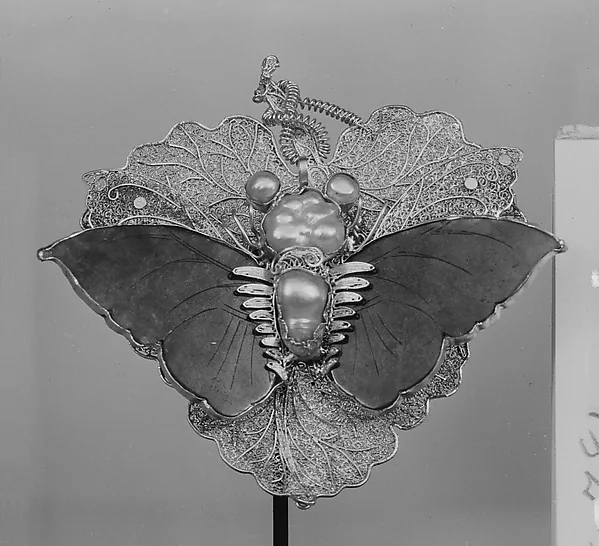
Fineness and color are different questions
An 18K mark states a proportion of gold in the alloy; it does not, by itself, say whether the alloy is yellow, rose or white. Color depends on the alloy composition and finishing. Nor does karat fineness tell a buyer how well a mount was built, how much metal is present, or whether the jadeite was identified and tested. Those require separate evidence.
When a description says “K-gold set jadeite,” ask for the complete metal mark, the responsible maker or seller information required in the relevant market, the construction of the mount and the gemological report terms. Avoid reading “18K” as a quality grade for the stone. Our guide to jadeite laboratory reports explains what gem documents can—and cannot—establish.
Gold plated, gold filled and gold overlay are not synonyms for solid karat gold
The FTC’s US guidance distinguishes these terms. Gold plating places a gold layer on another metal by electroplating or other processes and can wear with use. “Gold filled,” “gold overlay” and “rolled gold plate” describe a mechanically applied layer of at least 10K gold over base metal under the cited US guidance, with marking details tied to the layer’s proportion. Vermeil is a gold-plated product with a sterling-silver base.
These are construction terms, not visual judgments. A photograph cannot reliably establish layer thickness or base metal. “Gold color,” “gold tone” and an unqualified “gold” should not be silently converted into a karat claim. Ask for the exact mark and applicable standard. Rules and customary Chinese terms can differ by jurisdiction, so this page does not export US thresholds as a universal code.
包金 is not 包镶
Chinese usage makes a crucial distinction. 包镶 or 包边镶 describes a setting geometry: a metal rim encloses the stone’s edge, corresponding broadly to a bezel setting. 包金 is used inconsistently in commerce and may refer to a gold layer over another metal, but it does not by itself specify whether the construction is plated, mechanically bonded, rolled or something else. The seller should name the actual process and metal mark.
A jadeite cabochon held by an 18K bezel is an 18K gold setting if the metal claim is accurate; it is not “gold filled” merely because the gold surrounds the stone. Conversely, a gold-layered base-metal object is not a bezel setting unless its geometry actually encloses a stone. For structure, see bezel settings for jadeite.
Metal choice changes the visual field
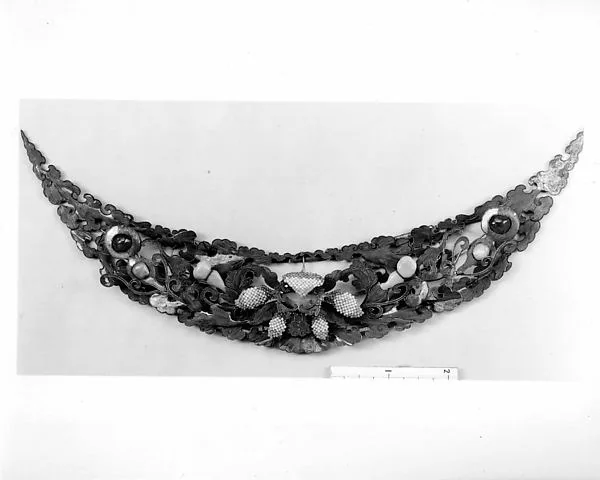
Yellow metal can introduce a warm boundary around green or lavender jadeite; white metal can create a cooler, higher-contrast edge. The effect depends on width, surface finish, backing, stone thickness and lighting. It is an optical relationship, not evidence that one alloy “improves” the material. Compare under neutral light before treating metal color as a stable property of the stone.
Construction also matters. Fine filigree, a broad bezel and a narrow prong frame distribute visual weight differently. A substantial mount may be appropriate for one piece and overpower another. The more useful question is whether metal supports the individual shape and intended wear while leaving the jadeite’s form intelligible. See the broader jadeite setting guide.
Inspection, care and repair
Check hallmarks, joints, prong or bezel contact and signs of wear. Plated surfaces can abrade, so aggressive polishing may remove part of the layer. Even solid karat-gold jewelry loses metal during polishing, and repeated work can thin prongs. GIA’s repair guidance stresses material identification, awareness of treatments and removal of a stone before repair whenever practical.
Cleaning must account for both the jadeite and the mount. Warm soapy water with a soft brush is a conservative baseline when the construction is understood, but loose stones, uncertain adhesives or unknown treatments call for professional inspection. Do not use a metal term as a substitute for a condition assessment.
Research basis
- Buying Platinum, Gold, and Silver Jewelry — US Federal Trade Commission
- Gemstone Durability: Design to Display — Gems & Gemology, GIA
- Jade Care and Cleaning Guide — GIA